
One Day

Critics' Week Competition

Cannes 2018
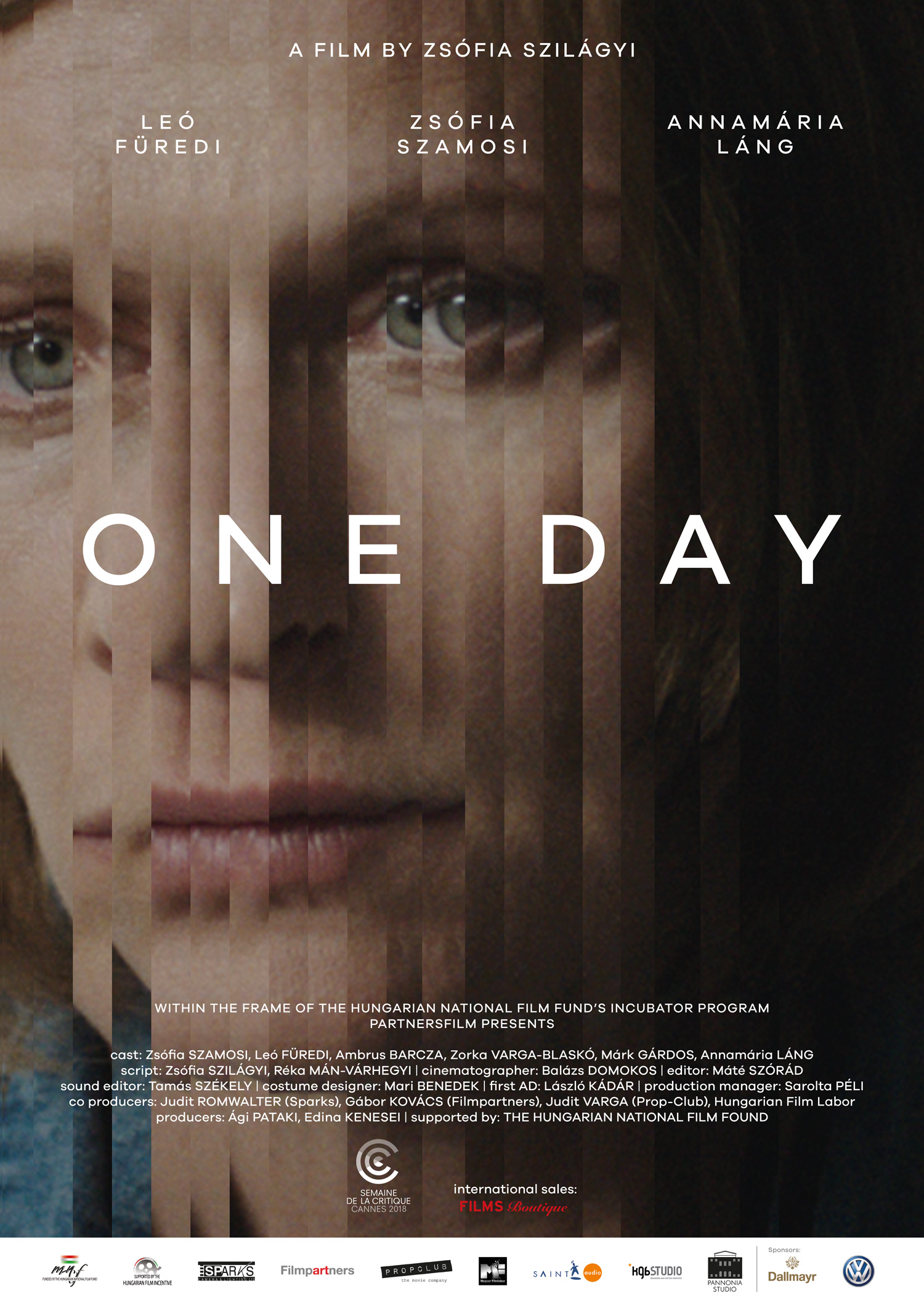
One Day
A Film by Zsofia Szilagyi
2018 - Hungary - Drama - 2.39 - 99 min.
with Zsófia Szamosi & Leo Füredi
Language: Hungarian
Produced by Agi Pataki & Edina Kenesei
Anna is 40. She is always in a rush. She has three children, a husband, a job and financial stress. Anna meets deadlines, makes promises, takes care of things, brings stuff home and remembers everything. But she never catches up with her husband. She’d like to talk to him. She feels she is losing him. And she feels she can’t always evade what comes next. A clash between the everyday, the unbearably monotonous and the fragile and unique.
Critics' Week Competition
Cannes 2018
More Films

The Woman Who Left
A film by Lav Diaz
2016 - Philippines - Drama - 1.85 - 226 min.
Horacia has spent the last 30 years in a women's correctional facility. A former elementary school teacher, she leads a quiet existence helping others practice reading and writing. When another inmate confesses to the original crime, Horacia is released and seeks out her estranged family. While searching for her missing son Junior, she discovers again her homeland - the Philippines of the late 90s, only to realize that its inhabitants are terrorized by corruption and rampant kidnappings. Her generous personality becomes tainted by feelings of revenge...

Director's Diary
A film by Alexander Sokurov
2025 - Italy/Russia - Non Fiction - 305 min.
DIRECTOR’S DIARY is a journey, a unique reading of the history of the second half of the twentieth century, where literature and cinema merge in a single flow that transcends documentary genres.
Following Russian Ark and Francofonia, visionary master of cinema Alexander Sokurov has created a grandiose work with multiple meanings set against the backdrop of thousands of faces and events from the pulsating life of the entire globe.

To Live To Sing
A film by Johnny Ma
2019 - France/China - Drama - 1.78 - 100 min.
Zhao Li is the manager of a small Sichuan Opera troupe, living and performing together in a rundown theatre located in the outskirts of Chengdu, China. When she receives the notice of demolition for the theatre, Zhao Li hides the news from everyone else, fearing that this could spell the end of her opera troupe: besides demolition, it’s the life of her “family” that is at stake. As she struggles to search for a new theatre for them to both sing and live in, the opera and its fantastic characters slowly begin to seep into her real world...